
Mexico City Street Food Guide - Tacos, Tlacoyos and Where Locals Eat
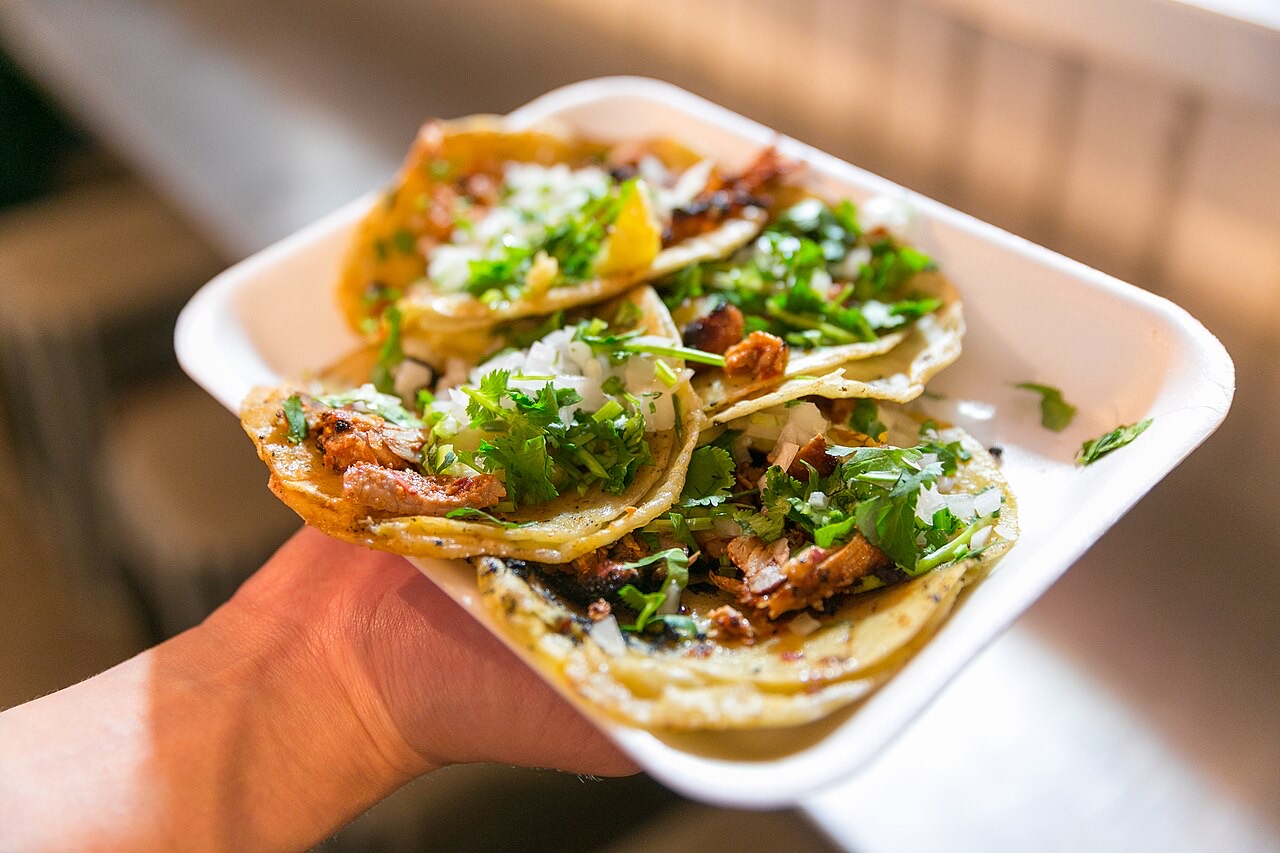
Photo: City Foodsters, CC BY 2.0, via Wikimedia Commons
Mexico City's essential street foods are tacos al pastor carved from the trompo at night, tlacoyos and quesadillas pressed fresh on comals, Sunday-morning barbacoa, carnitas, esquites from evening carts, and tamales (or a torta de tamal) at breakfast. Markets like Mercado de San Juan and Mercado Medellín and the taquerías of Roma and Condesa are reliable places to start.
Filming the Mexico City episode of Epic Food Journeys with Mark Wiens confirmed something we suspected: this might be the single deepest street food city on earth. Not the flashiest. The deepest. Every hour of the day has its own dish, every dish has its specialists, and the specialists have been at their corner longer than most restaurants stay open.
Here’s how to eat it like the city intends.
The day starts with masa
Before the office crowd is fully awake, the tamale vendors are already steaming. Tamales in CDMX are breakfast - and the local power move is the guajolota, a tamal stuffed into a bread roll. Carbohydrate on carbohydrate, designed for people heading to real jobs. With it, atole or champurrado, thick warm drinks of the same corn that built the city.
Mid-morning belongs to the comal ladies. Tlacoyos - blue-corn ovals stuffed with beans or requesón, topped with nopales and salsa - are one of the oldest continuously eaten dishes in the Americas, older than the Spanish conquest, still pressed by hand on street corners for pocket change. Quesadillas here are made from fresh masa and stuffed to order; flor de calabaza (squash blossom) and huitlacoche are the fillings to seek out. (Yes, in CDMX a quesadilla doesn’t automatically contain cheese. Locals enjoy watching visitors discover this.)
Weekends mean barbacoa and carnitas
Sunday morning barbacoa is a ritual we planned an entire shoot day around. Lamb, slow-cooked the traditional way in agave leaves in an underground pit, pulled apart and served with its own consommé, hot tortillas and a firing squad of salsas. Arrive before noon or don’t bother; the good stalls sell out.
Carnitas - pork slow-confited in its own fat, every cut from loin to the parts you don’t ask about - is the other weekend heavyweight. Order “surtida” (mixed) for the full experience and let the carnitero decide your fate.
The markets
Mercado de San Juan is the chefs’ market, famous for exotic produce and serious ingredients, with tostada counters worth the trip alone. Mercado Medellín in Roma brings in flavours from across Latin America alongside the Mexican staples. Every neighbourhood has its own mercado with a comida corrida section where the eating is honest and the prices barely register. Market fondas are also where you learn the city’s greatest lesson: the less a place has invested in signage, the more it has invested in the food.
Night belongs to al pastor
The trompo - the glowing, spinning cone of chile-marinated pork - is Mexico City’s lighthouse. Tacos al pastor are a descendant of shawarma brought by Lebanese immigrants, perfected into something entirely chilango: thin-carved pork, a flick of pineapple off the top of the spit, onion, cilantro, salsa, on a small corn tortilla. The knife work is theatre and the taco is somehow always exactly four bites.
Late-night taquerías across Roma, Condesa and the Centro run until the small hours, and the crowd at 1 a.m. is the city’s honest cross-section: kitchen workers, dates, taxi drivers, and occasionally a film crew that wrapped hungry.
Between meals
Esquites - corn kernels simmered with epazote, served in a cup with mayo, cheese, chile and lime - are the evening street snack, sold from carts you’ll hear before you see. Churros dipped in chocolate close the day; the city’s famous churrerías run into the night. And drink licuados and aguas frescas relentlessly; jamaica and horchata are hydration with a personality.
Crew notes
Carry coins and small bills. Follow the salsa rule: taste before committing, because “no pica” is a regional opinion, not a fact. Queues move fast, so know your order. And if a vendor has one dish and thirty years of practice, order exactly that dish.
Watch Mark take on the city’s 24-hour street food marathon in Epic Food Journeys, streaming free on National Geographic’s YouTube channel, and find more of our destination guides in stories.
Frequently asked questions
What food is Mexico City most famous for?
Tacos al pastor - marinated pork carved from a vertical spit called a trompo, served on small corn tortillas with pineapple, onion and cilantro. It's the dish most chilangos would name as the city's signature, and it's best eaten at night.
What is a tlacoyo?
A tlacoyo is an oval of blue or yellow corn masa stuffed with beans, cheese or fava paste, cooked on a comal and topped with nopales, salsa and cheese. It's a pre-Hispanic dish still sold by street vendors, often run by women who have worked the same corner for decades.
When should I eat barbacoa in Mexico City?
Weekend mornings, especially Sunday. Barbacoa - lamb slow-cooked traditionally in an underground pit - is a weekend ritual, served with consommé, tortillas and salsas, and stalls often sell out before noon.
